ALO DRIVING SCHOOL
DRIVE WITH CONFIDENCE
1221 W. Airport Fwy, Suite #217 (2nd Floor), Irving, TX 75062
DRIVE WITH CONFIDENCE
1221 W. Airport Fwy, Suite #217 (2nd Floor), Irving, TX 75062
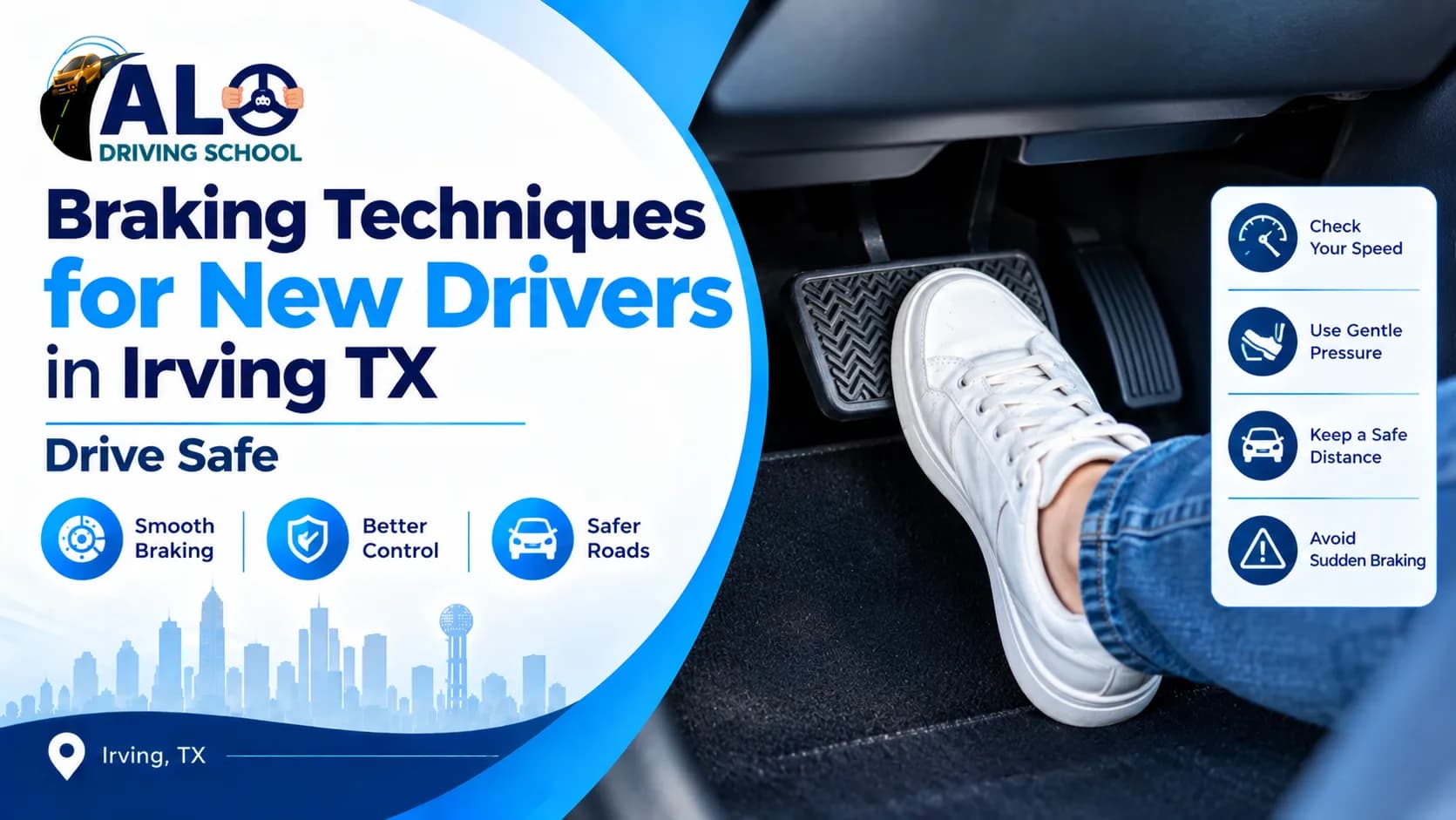
Find out the latest Braking Techniques for New Drivers!
Braking techniques for new drivers are essential for maintaining control, avoiding sudden stops, and responding safely to changing traffic conditions. New drivers need to understand how speed, following distance, road conditions, and attention affect their ability to stop. Proper braking helps drivers make smoother turns, approach intersections safely, and react calmly when traffic slows unexpectedly. Beginner braking practice can build confidence while reducing the risk of panic or overcorrection. Alo Driving School provides practical instruction to help students develop stronger vehicle control for new drivers.
Many beginner drivers brake too late, press the pedal too suddenly, or follow other vehicles too closely. These habits can make the vehicle stop abruptly, reduce control, and create danger in traffic. Safe braking requires drivers to observe the road ahead, anticipate slowdowns, and begin reducing speed early instead of waiting until the last moment.
Braking techniques for beginners improve through consistent practice and feedback. Students learn to apply steady pressure, maintain a safe following distance, and adjust their speed before turns, stop signs, traffic lights, and changing road conditions. These driving techniques for beginners Irving TX students practice help build safer habits and make everyday driving feel more controlled.
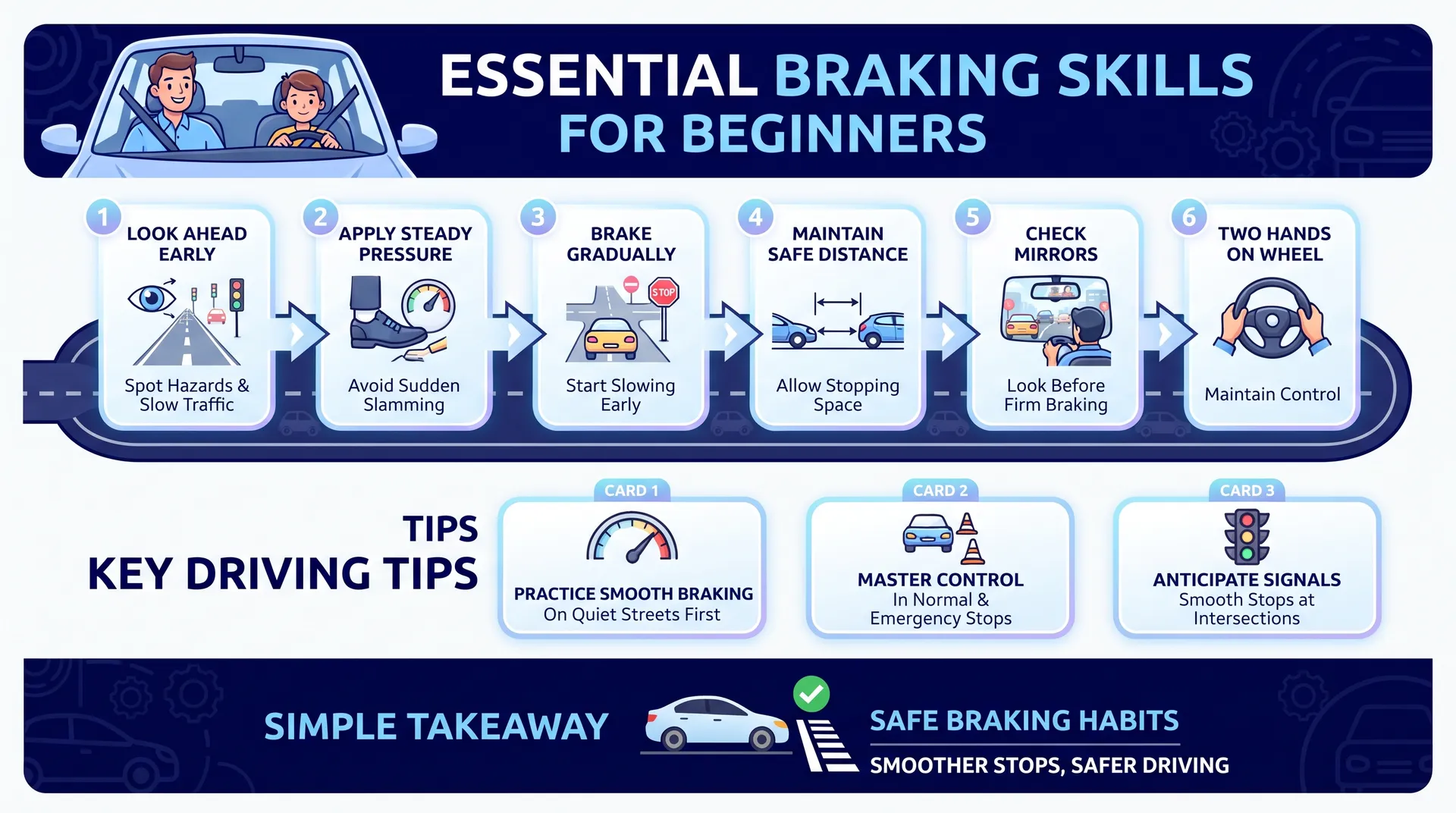
Proper braking techniques begin with looking ahead and recognizing when traffic may slow or stop. Drivers should avoid waiting until they are close to another vehicle or intersection before using the brake. Early, gradual braking gives both the driver and nearby vehicles more time to react.
Apply steady pressure instead of suddenly slamming on the brake.
Begin slowing down early before turns, intersections, and stop signs.
Maintain enough space to allow safe braking distance for beginners.
Check mirrors before braking firmly when traffic is behind you.
Practice smooth braking techniques on quieter streets before busy roads.
Keep both hands ready for vehicle control during normal and emergency stops.
These safe braking techniques help drivers remain calm when traffic conditions change. With practice, students learn to judge their speed, spacing, and stopping needs more accurately instead of reacting at the last second.
Smooth braking helps a driver maintain balance, comfort, and control. Instead of pressing the brake pedal suddenly, drivers should gradually ease off the accelerator and apply steady pressure to slow the vehicle. This is especially important when approaching red lights, intersections, parked vehicles, or slower traffic.
Braking distance depends on speed, driver attention, traction, road conditions, and brake condition. Higher speed increases the amount of distance needed to stop safely. A Texas driver handbook source notes that at 55 mph, an average driver on a road with good traction and brakes may need more than 300 feet for total stopping distance.
Driving Situation | Braking Focus | Safety Benefit |
Normal traffic | Slow gradually and keep space | Reduces sudden stops |
Intersections | Brake early and stop smoothly | Improves control |
Wet or low-grip roads | Reduce speed and increase distance | Provides more reaction time |
Fast-moving roads | Look ahead and plan early | Helps manage stopping distance |
Alo Driving School provides practical car lessons for students who want to improve control, braking, and everyday driving skills.
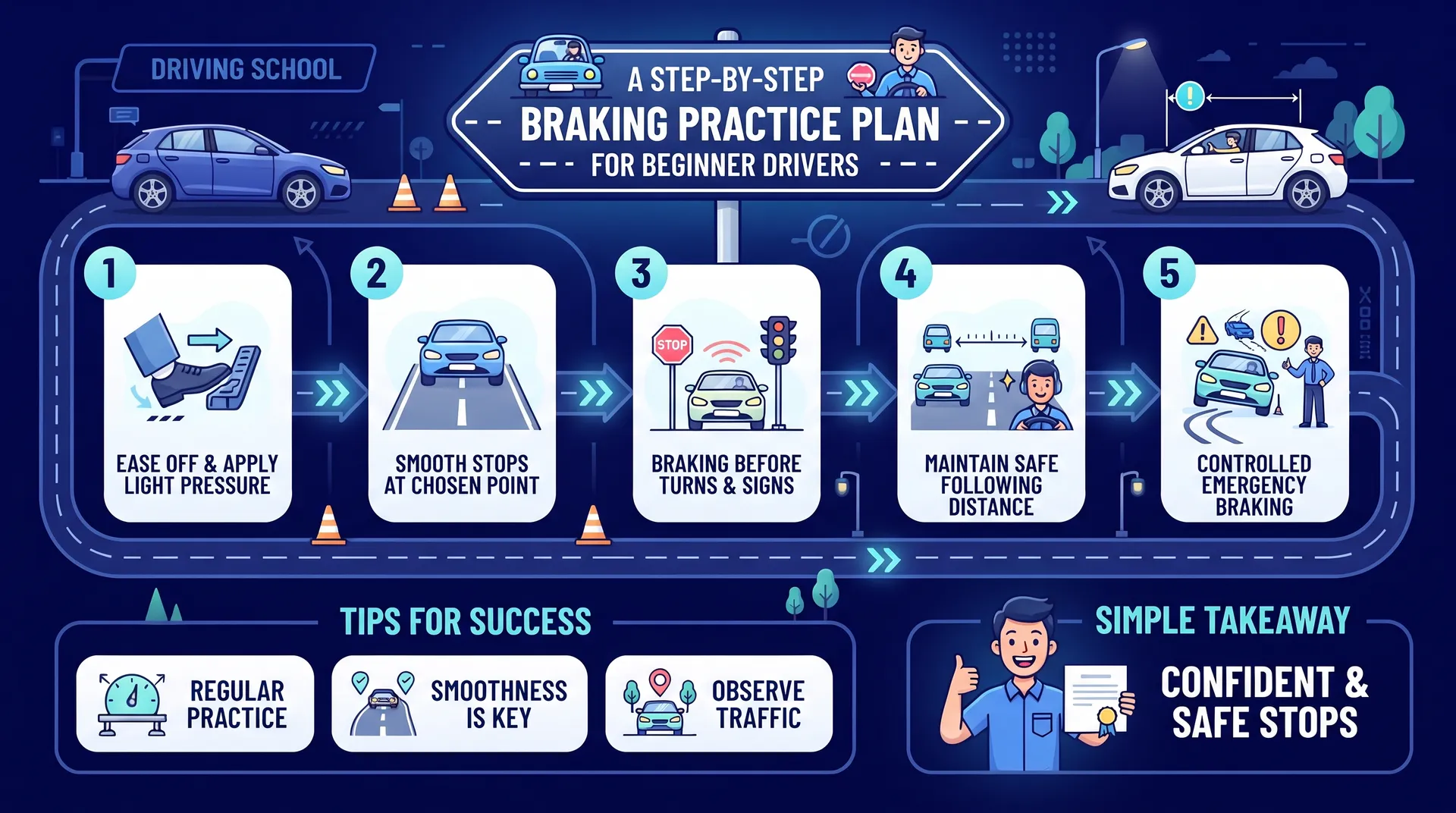
Beginner braking practice should start in a low-pressure environment before students handle heavier traffic. New drivers need time to understand pedal sensitivity, vehicle response, and the difference between slowing down gradually and stopping quickly. Practicing repeatedly helps braking become smoother and more predictable.
Practice easing off the accelerator and applying light brake pressure.
Stop smoothly at a chosen point on a quiet road or open parking area.
Practice braking before turns, stop signs, and traffic lights.
Maintain a safe following distance and observe traffic farther ahead.
Add controlled emergency braking techniques when guided by an instructor.
This process improves vehicle control for new drivers and helps students avoid common mistakes, including braking too late, pressing too hard, or stopping too close to another vehicle. An instructor can provide direct feedback on timing, pressure, speed, and traffic awareness.
Emergency braking techniques are used when a driver must stop quickly to avoid a hazard. Drivers should keep both hands on the wheel, press the brake firmly, and focus on maintaining steering control. Modern vehicles with anti-lock braking systems are designed to help drivers maintain steering ability during hard braking, so drivers should apply firm, continuous pressure rather than pumping the brakes.
The best way to reduce the need for emergency braking is to stay alert and leave enough room ahead. Drivers who scan traffic, maintain distance, and reduce speed early are less likely to face a sudden stop. Emergency braking is not a substitute for safe following distance or careful observation.
Braking can affect road-test performance because examiners observe speed control, stops, turns, following distance, and overall vehicle handling. Abrupt braking, late stops, rolling stops, and poor control at intersections may negatively affect a student’s result.
Alo Driving School offers practical car lessons and road-test scheduling in Irving. Students can ask about pre-test practice to focus on smooth stops, turns, traffic awareness, parking, and other driving skills before an appointment. Confirm current pricing, availability, documentation, and eligibility directly with the school.
Proper braking techniques include looking ahead, easing off the accelerator early, applying steady brake pressure, and maintaining enough space to stop safely. Practice helps new drivers avoid sudden, harsh braking.
Practice braking gradually on quieter streets and focus on slowing down before you reach a stop sign, turn, or red light. Looking farther ahead helps you recognize the need to brake earlier.
Braking distance changes based on speed, road conditions, traction, vehicle condition, and driver reaction time. At higher speeds, drivers need significantly more room to stop safely; one Texas handbook source estimates more than 300 feet at 55 mph under good conditions.
In a vehicle with anti-lock brakes, use firm and continuous pressure on the brake pedal rather than pumping it. Keep control of the steering wheel and look where you need the vehicle to go.
Yes, professional driving lessons can help students practice smooth stops, safe following distance, emergency responses, and overall vehicle control. Alo Driving School provides beginner driving support and practical car lessons.
Braking techniques for new drivers help students develop smoother stops, safer following distance, stronger observation, and better vehicle control. Consistent practice can make city driving, traffic, turns, and road-test preparation feel safer and more manageable.
Name: Alodriving School
Address: 1221 W. Airport Fwy, Suite #217 (2nd Floor), Irving, TX 75062
Phone: 214-862-6365