ALO DRIVING SCHOOL
DRIVE WITH CONFIDENCE
1221 W. Airport Fwy, Suite #217 (2nd Floor), Irving, TX 75062
DRIVE WITH CONFIDENCE
1221 W. Airport Fwy, Suite #217 (2nd Floor), Irving, TX 75062
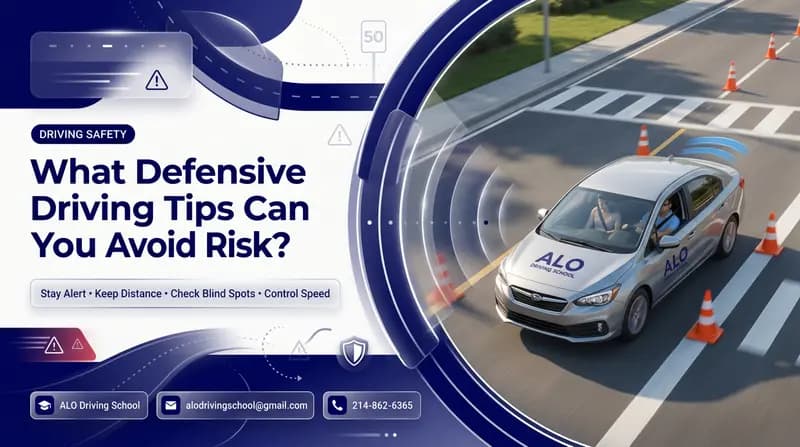
Use these defensive driving tips, then join ALO Driving’s Online Course for Defensive Driving. Call 214-862-6365 to start online.
Defensive driving tips help you stay ready before danger gets close. They guide your speed, space, focus, and choices in real traffic. These habits also help you prevent accidents, reduce stress, and protect your car. Irving drivers need smart skills for busy roads, school zones, rain, and fast lane changes. ALO Driving School helps you build these safer habits with flexible online learning.
Driving tips matter because Irving roads can change quickly. You may face sudden braking, crowded lanes, distracted drivers, and bad weather in one trip.
You need more than basic driving rules. You need habits that help you think ahead. Irving has commuters, students, airport traffic, delivery drivers, and new drivers. This mix can make simple drives feel stressful. Strong Defensive driving practices in Irving help you stay alert without feeling tense. You learn to notice small risks early. You also learn how to give yourself room before problems grow. If you want guided local help, you can start your online learning path through ALO Driving School.
Defensive driving helps you read traffic like a pattern. You start noticing what drivers may do before they do it.
This skill matters because danger often gives small signs first. A car may drift in its lane. A driver may keep tapping brakes. Someone may speed between lanes. Another driver may follow too closely. You should Watch for other drivers’ behavior before you react. This gives you extra time. It also helps you avoid sharp braking and quick swerves. A safer driver watches far ahead, checks mirrors often, and leaves room for mistakes.
These habits help you feel prepared. You stop guessing. You start making safer choices with more confidence.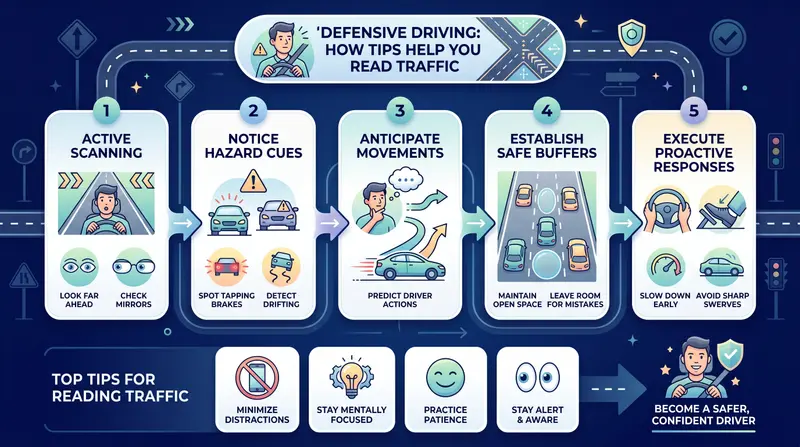
Defensive driving tips work best when you use them before traffic gets hard. Simple habits can prevent many stressful moments.
Daily driving brings repeated risks. You may face school zones, crosswalks, busy parking lots, and sudden lane changes. You should Use signals properly before every turn or lane move. You should also check blind spots and avoid tight gaps. Many crashes happen because one driver assumes another person saw them. Clear signals, patient timing, and steady speed help reduce that risk. These habits also support Safer roads in Irving because they make your actions easier to understand.
|
Daily Situation |
Safer Choice |
Why It Works |
|
Turning right |
Signal early |
Drivers know your plan |
|
Merging lanes |
Check twice |
You avoid blind spots |
|
School traffic |
Slow down sooner |
Children stay safer |
|
Parking lots |
Watch both sides |
People move suddenly |
|
Intersections |
Pause and scan |
You catch red-light runners |
Good driving does not need to feel complex. You only need steady habits that you repeat daily.
Defensive driving safety tips lower accident risk by giving you more time. More time helps you see danger, slow down, and choose safer actions.
Most crashes involve a chain of small mistakes. Someone speeds. Someone looks away. Someone follows too closely. Someone changes lanes too late. When you drive defensively, you break that chain. You keep space, stay focused, and avoid risky pressure. This helps you Prevent accidents before they happen. It can also help your passengers feel safer. ALO Driving School teaches these habits in a clear way, so local drivers can use them on real Texas roads.
Small habits can create big safety gains. You protect your car, your record, and everyone near you.
ALO Driving School’s online course helps you build safer habits without changing your whole schedule for defensive driving tips. You can learn from home and still gain practical road skills.
This course is a smart choice if you want better awareness, calmer reactions, and stronger judgment. You can review road safety, driver responsibility, traffic rules, and common risk patterns. It also helps when you want a flexible learning option from a local Irving school. You do not need to wait for a ticket or close call. You can improve now. When you feel ready, you can begin with ALO’s online course page and take a simple step toward safer driving.
To Stay focused and eliminate distractions, you need a plan before driving. Your phone, food, music, and stress can all pull attention away.
Distraction is dangerous because it steals seconds. A few seconds can change everything. You may miss brake lights. You may drift from your lane. You may fail to notice a person crossing. Put your phone away before moving. Set your route early. Adjust mirrors before you leave. Keep both hands ready. If a message feels urgent, stop safely first. These steps help you protect your attention and drive with more control.
You should Adjust your speed for road conditions instead of only following the posted limit. Weather, traffic, and road shape all matter.
A safe speed changes with the situation. You may need to slow down near schools, curves, rain, fog, work zones, or heavy traffic. You should also slow down when visibility drops. Driving too fast can reduce your reaction time and increase stopping distance. Smart speed control helps you stay steady. It also helps with Reduce vehicle wear and tear because smoother driving protects brakes, tires, and fuel use. Safer speed choices support both safety and long-term car care.
|
Road Condition |
Better Speed Choice |
Extra Benefit |
|
Heavy traffic |
Slow and steady |
Less hard braking |
|
Rain |
Reduce speed |
Better tire grip |
|
Fog |
Drive slower |
More time to react |
|
Sharp curves |
Ease off gas |
Better control |
|
Work zones |
Follow posted signs |
Fewer risks |
Speed is not about rushing. It is about control. The right pace keeps you safer.
Defensive safety driving tips do more than lower crash risk. They can also protect your vehicle from extra strain and costly repairs.
Hard braking, quick starts, sharp turns, and late reactions can wear your car faster. Smooth driving helps your tires, brakes, suspension, and engine work better. You may also save fuel when you avoid aggressive moves. Defensive driving helps you plan ahead, so your car does not work as hard. That means safer trips and better vehicle care. If you feel unsure during real driving, ALO Driving School also offers extra support, and you can get more behind-the-wheel help when you need personal practice.
Safer roads in Irving start with small choices from each driver. Your habits affect people around you every time you drive.
You create a safer road when you follow speed limits, signal early, yield properly, and respect crosswalks. You also help when you leave space and avoid anger. These choices may feel simple, but they reduce confusion. Other drivers can understand your next move. Pedestrians get more time. Cyclists and motorcyclists get more space. You also support Follow traffic laws of Irving when you respect signs, signals, and posted limits. Good driving creates a safer community, not just a safer trip.
Defensive driving helps you stay calm when traffic feels frustrating. Stress can make good drivers act too fast or too aggressively.
You may feel pressure when you run late. You may get annoyed by honking. You may feel trapped behind slow traffic. Defensive driving helps you pause before reacting. You can breathe, keep space, and avoid risky moves. You can also plan extra time for busy routes. This lowers stress and supports safer choices. If you need a full driving path later, you can review ALO’s main course options and choose the service that fits your goal.
Handling other drivers starts with accepting one truth. You cannot control their choices, but you can control yours.
Some drivers will speed. Some will drift. Some will text. Some will fail to signal. Your job is not to teach them on the road. Your job is to stay safe. Watch their movement. Give space to risky drivers. Avoid driving beside trucks longer than needed. Let aggressive drivers pass. Do not compete for position. This mindset protects you from emotional choices. It also helps you stay focused on your own safe path.
Unpredictable drivers need extra space. You should never assume they will make the right choice and follow important defensive driving tips.
Watch for signals that do not match movement. Notice drivers who slow down without reason. Give extra room to cars that weave or speed up suddenly. If someone tailgates you, add space in front and change lanes when safe. Do not brake-check. Do not argue. Do not race. These choices help you avoid becoming part of the problem.
A calm driver has more control. You do not lose by letting danger pass.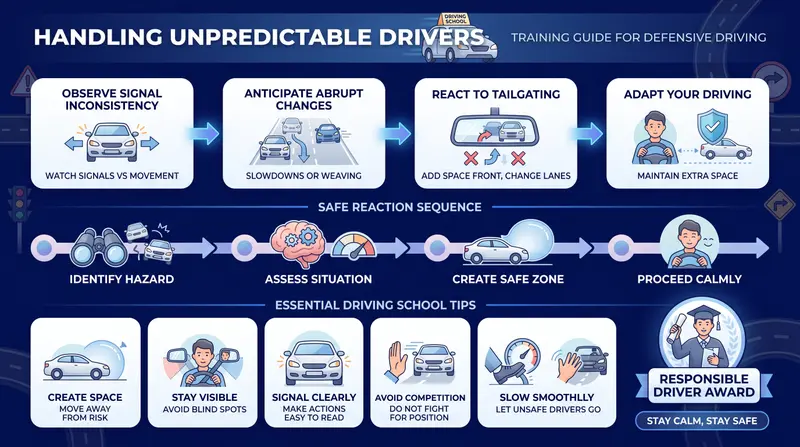
Signals help other drivers understand your plan. They also reduce confusion during lane changes, turns, and merges.
Use your signal early enough for others to react. Check your mirrors before you move. Look over your shoulder to check blind spots. Move only when the gap feels safe. Do not force other drivers to brake hard. When roads feel busy, plan your lane sooner. Last-second moves increase risk. Better signaling supports smoother traffic and fewer surprises. It also shows respect for everyone near you.
The best habits include scanning ahead, keeping space, and staying focused. You should also signal early and avoid distractions.
They help you manage local traffic with more control. You learn safer choices for school zones, busy roads, and sudden stops.
Yes, they can lower your risk by improving timing and awareness. You still need to use them every time you drive.
Drive smoothly, avoid hard braking, and control your speed. These habits help protect brakes, tires, and fuel use.
Yes, ALO Driving School offers online course options. You can call 214-862-6365 before you enroll.
Better driving starts with small choices. You can stay focused, signal early, keep space, and adjust your speed with more care.
Do not wait for another close call. ALO Driving School can help you build safer habits and feel more confident behind the wheel.