ALO DRIVING SCHOOL
DRIVE WITH CONFIDENCE
1221 W. Airport Fwy, Suite #217 (2nd Floor), Irving, TX 75062
DRIVE WITH CONFIDENCE
1221 W. Airport Fwy, Suite #217 (2nd Floor), Irving, TX 75062
Prepare for your driver’s license test with our complete guide. Get tips on the written knowledge test, road skills test, and car requirements to pass with confidence.
Getting your driver's license is a huge milestone, and passing the driver's license test is the first step toward gaining the freedom to drive. Whether you're preparing for your written knowledge test or your road skills test, understanding the requirements and the process can make all the difference. In this comprehensive guide, we'll walk you through everything you need to know about the driver’s license test, from requirements to preparation tips, so you can pass with confidence!
The driver’s license test is a key requirement for obtaining a driver’s license. It typically consists of two parts:
The Written Knowledge Test – a series of questions that test your understanding of traffic laws, road signs, and safe driving practices.
The Road Skills Test – a practical driving test that evaluates your ability to operate a vehicle safely and follow traffic rules on the road.
Before you can take these tests, you’ll need to meet certain requirements set by your state’s Department of Motor Vehicles (DMV) or equivalent agency.
The requirements to take the test vary by state, but generally, you must:
Be of legal driving age (often 16 or 18).
Hold a valid learner’s permit for a certain period (usually 6 months to 1 year).
Complete a driver education course (in some states).
Pass a vision test.
If you are an adult looking for driver education, check out Adult Driver Ed for a comprehensive learning program tailored to your needs.
The written knowledge test is the first step in earning your driver's license. It typically consists of multiple-choice questions that test your understanding of road signs, traffic laws, and safe driving practices.
Traffic Signs: Know the meanings of stop signs, yield signs, speed limit signs, and other common road signs.
Traffic Laws: Understand the rules of the road, such as when to yield, how to use lanes properly, and the speed limits in various areas.
Safe Driving Practices: Learn the best practices for driving safely, like how to handle bad weather, sharing the road with cyclists, and dealing with emergencies.
Study Your State’s Driver’s Handbook: Every DMV or licensing agency provides a driver's handbook, which contains all the material that could be on your test.
Take Online Practice Tests: Many websites and apps offer free practice tests that mimic the real written exam. This will help you get comfortable with the format and types of questions.
Review Road Signs: Make sure you are familiar with both common and uncommon road signs.
If you are preparing for the road skills test and need help scheduling your appointment, you can find more information on how to schedule your road test.
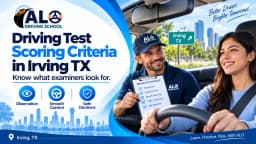
Once you’ve passed the written knowledge test, you’ll need to take the road skills test, also known as the driving test. This practical test evaluates your ability to drive safely and follow traffic laws in real-world conditions.
During the road skills test, you’ll be asked to demonstrate various driving maneuvers, such as:
Parallel Parking: Parking your car between two other vehicles without hitting the curb.
Lane Changes: Safely changing lanes on a busy street or highway.
Turning and Signal Use: Correctly using your indicators and making smooth turns.
Stopping and Yielding: Demonstrating your ability to stop at stop signs and yield when necessary.
Backing Up: Properly reversing your vehicle while staying aware of your surroundings.
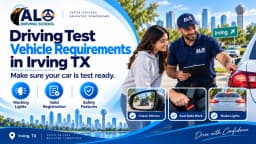
Make sure the vehicle you use for your road skills test meets the following requirements:
Valid Registration and Insurance: The car must be properly registered and insured.
Operational Safety Features: Ensure the car has functioning seat belts, brake lights, and headlights.
Good Condition: Your car should be in good working condition—make sure the tires, windshield wipers, and brakes are all in working order.
Practice! The more you practice, the more comfortable you’ll feel behind the wheel.
Stay Calm: Nerves are normal, but try to stay calm and focused. Take deep breaths and remember that the examiner is there to help you succeed.
Follow Instructions Carefully: Listen carefully to the examiner’s directions and ask for clarification if you’re unsure of anything.
If you are a teenager preparing for your driving test, check out Teenage Driving Courses to get tailored lessons for young drivers.
Scheduling your driver’s license test is usually done online through your state’s DMV website. Some states also allow you to schedule in person or over the phone.
Your Learner’s Permit: You’ll need to bring your valid learner’s permit to take both the written and road tests.
Proof of Identity: Bring your birth certificate, passport, or another government-issued ID.
Proof of Address: A utility bill or other official document with your name and address.
Vehicle Registration and Insurance: As mentioned, your car must meet the requirements.
For those who prefer to learn in Spanish, consider checking out the Spanish Driving Course for additional resources and assistance.
After you pass both the written knowledge and road skills tests, you will be issued a temporary driver’s license. Your permanent license will typically be mailed to you within a few weeks.
Don’t worry if you don’t pass the test on your first try! Most states allow you to retake the written or road test after a certain waiting period. Use the time to study or practice your driving skills more before your next attempt.
Passing your driver’s license test doesn’t have to be stressful if you prepare properly. By understanding the test requirements, practicing your driving skills, and studying the material for the written exam, you’ll be well on your way to becoming a licensed driver. Stay calm, follow the instructions, and remember that the key to success is practice and preparation!
If you’re ready to begin your journey, or need a little help getting started, explore Adult Driver Ed and the Teenage Driving Courses available at Alos Driving School.
 4
4