ALO DRIVING SCHOOL
DRIVE WITH CONFIDENCE
1221 W. Airport Fwy, Suite #217 (2nd Floor), Irving, TX 75062
DRIVE WITH CONFIDENCE
1221 W. Airport Fwy, Suite #217 (2nd Floor), Irving, TX 75062
Wondering how hard is the road test? Schedule your road test with ALO Driving. Call 214-862-6365 to book your spot today.
If you ask how hard is the road test, the answer depends on your practice, your focus, and your comfort with real traffic. The test checks how safely you handle stops, turns, parking, speed, lane movement, and examiner directions. You do not need to drive perfectly, but you do need steady judgment. This guide gives you clear, simple help for mastering the driving test in Irving. It also shows how ALO Driving School can help you schedule your road test with more confidence.
The difficulty of the road test depends on how prepared you feel under pressure. The test becomes harder when your skills only work on familiar roads.
Many learners practice the same streets too often. That can make you feel ready, but it may not prepare you for test pressure. A road test checks your timing, judgment, and safe choices. You may need to slow down, follow directions, read signs, and react to other drivers. That is why mastering the driving test in Irving takes more than basic car control. You need practice in different areas, at different times, and with different traffic patterns. When your habits feel steady, you can choose a road test time with ALO and move forward with a clear plan.
Road test can feel different when the examiner sits beside you. Your normal driving may feel slower, tighter, or less natural.
This happens because nerves change your routine. You may grip the wheel too hard. You may forget to breathe. You may rush a turn because silence feels uncomfortable. Use a short pre-drive routine to settle your mind. Adjust your seat. Set your mirrors. Buckle up. Check around your car. Then take one slow breath before moving. These simple test day driving tips can help you stay focused before the first instruction.
A calm start helps the whole drive. It also gives you time to think.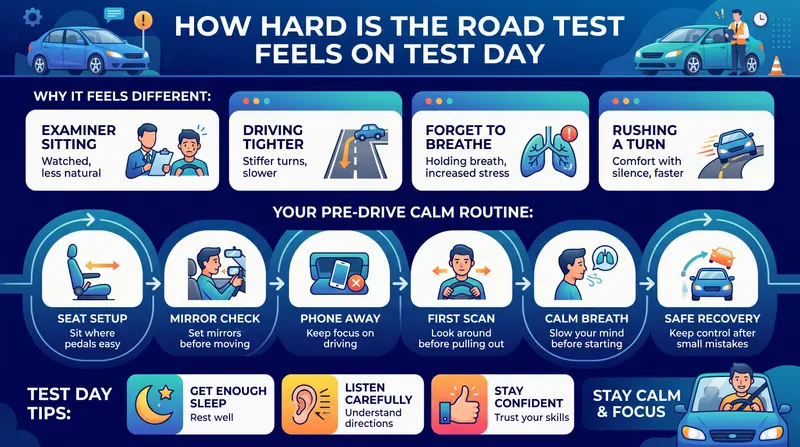
Road test feels easier when your basic habits feel automatic. You should not need to overthink every move.
Start with the skills examiners notice most. These include smooth stops, legal speed, clear signals, safe turns, and steady spacing. You should also practice speed control on driving test routes with changing limits. That helps you avoid braking too late or entering turns too fast. If your weak areas need extra road practice, you can get focused practice help before your test. Strong basics make your drive look safer and calmer.
|
Test Skill |
What It Shows |
Better Practice Method |
|
Smooth braking |
You can control pressure |
Slow down earlier |
|
Safe speed |
You understand road conditions |
Watch signs sooner |
|
Clear signals |
You plan before moving |
Signal before slowing |
|
Steady turns |
You control the wheel |
Look into the turn |
|
Proper spacing |
You manage risk |
Leave more room |
Your goal is not fancy driving. Your goal is safe, steady control.
Good road judgment helps you avoid common test mistakes. You need to know when to stop, when to wait, and when to move to ask yourself how hard is the road test.
Many learners lose points because they treat stops too casually. You should know how to stop at a stop sign correctly before test day. Slow down early. Stop before the line or crosswalk. Let the car fully settle. Then scan left, right, and left again. This habit also supports right-of-way rules driving test choices. At intersections, do not rush. Wait for pedestrians. Let the correct driver go first. Move only when your path looks safe.
A full stop shows control. Good yielding shows patience.
Stop signs look simple, but they reveal a lot. Examiners can see if you rush, roll, or miss cross traffic.
A rolling stop can hurt your score because it shows weak rule control. You should treat each stop like a short safety reset. Brake early, stop fully, and check the full area before moving. If another driver waves you forward, still check for danger. If you arrive at the same time as another car, use right-of-way rules driving test judgment. Safe timing matters more than speed.
Intersections can feel stressful because several things happen at once. You may see signs, cars, walkers, and turning lanes together.
Keep your eyes moving. Look for stop signs, traffic lights, lane markings, and people near the curb. If you plan a turn, signal early and slow before the turn. If traffic looks unclear, wait. A test examiner wants safe choices. You do not need to prove you are bold. You need to prove you can think. These habits support how to pass the driving test in Irving because local intersections can get busy fast.
Parking and backing show low-speed control. These skills need patience, space judgment, and careful observation.
Many learners fear parallel parking for driving test because it feels tight which makes them ask the same thing, How hard is the road test. The key is to slow everything down. Signal first. Line up properly. Check mirrors and blind spots. Reverse with small movements. Watch the curb, but keep scanning around you. The same calm control helps with backing up in a straight line. Move slowly, look behind you, and use small steering corrections. Low-speed skills reward patience, not speed.
Parallel parking becomes easier when you stop treating it like one big move. Break it into smaller actions.
Start with a clean setup. Keep space beside the parked car. Signal before reversing. Turn the wheel only when your position is ready. If you feel too close to the curb, pause and correct. Do not rush just because someone waits. Examiners care about safe control. A slow, careful park looks better than a fast, messy one. Practice until the steps feel calm.
Backing up is not only about steering straight. It also shows how well you watch the area around your vehicle.
Before you move backward, check behind you. Use your mirrors, but do not rely on them alone. Turn your head when needed. Keep your foot ready near the brake. Use small steering changes. If your car drifts, correct gently. This approach makes backing up in a straight line easier. It also helps you avoid overcorrecting during parking.
A clear test date can turn loose practice into focused practice. It gives you a real goal instead of a vague plan.
Some learners wait too long because they never feel perfect. Others book too soon and feel rushed. ALO Driving School helps you find a better middle ground. Practice your weak skills first. Check your documents. Then schedule when your habits feel safe and steady. The Road Test Schedule is the main next step when you feel ready. It can help you stop delaying and start preparing with purpose.
You may be ready when your driving feels consistent across different routes. You should handle normal traffic without constant reminders.
Look at your recent practice drives. Can you stop fully without being told? Can you hold lane position? Can you park with patience? Can you recover calmly after a mistake? These signs matter. A road test is not about perfect confidence. It is about safe independence. If your weak spots feel manageable, it may be time to schedule your appointment and keep practicing until test day.
Before your appointment, prepare both skills and details. A calm test day starts before you arrive.
Check your documents early. Confirm your test time. Wear shoes that give pedal control. Get enough rest if possible. Review your start-up routine. Practice your weakest skill one more time, but do not overload yourself. You should arrive with a clear mind. Good planning helps you focus on the examiner’s directions instead of last-minute stress.
An online course can help if you need stronger rule knowledge. It can support your road practice with better understanding.
Some adults can control the car, but still feel unsure about laws, signs, and safe decisions. That is where an online adult option can help. You can study road rules, responsibility, and safety basics around your schedule. This can support how to pass the driving test in Irving because better knowledge leads to better choices. You can review ALO’s online adult option here while you keep practicing behind the wheel.
Driving practice works better when you understand why each rule exists. You stop memorizing and start making smarter choices.
For example, speed signs help you prepare before danger. Right-of-way rules prevent confusion. Lane markings guide safe position. Once you understand the reason behind each rule, your driving becomes calmer. You make fewer guesses. You also respond better when traffic changes. Online learning can help you review these ideas at your own pace before you apply them on the road.
Adult learners often face different pressure. You may feel embarrassed, rushed, or nervous about starting later.
You should not let that stop you. Many adults become strong drivers because they take practice seriously. Use a simple plan. Review rules online. Practice with a licensed driver. Focus on one skill at a time. Ask for feedback. Then repeat the habit until it feels natural. This steady method helps you build real confidence without rushing.
Speed and lane choices can affect the whole road test. They show how well you manage changing traffic.
Good speed control on driving test means you match your pace to the road. You slow before turns, school areas, curves, and wet roads. You do not drive too slowly without reason. You also need clear lane change tips for safe movement. Check mirrors, signal early, check your blind spot, and move only when space allows. These habits show calm judgment and help the examiner feel safe.
A good lane change should feel planned, not rushed. You should never surprise nearby drivers.
Use the same order each time. Check mirrors first. Signal next. Look over your shoulder. Watch the speed of traffic in the next lane. Move smoothly if the gap is safe. If the gap is tight, wait. If you miss your lane, keep driving safely. A late lane change can create more risk than a missed turn. Safe recovery matters.
Safe speed does not mean slow driving. It means correct driving for the moment.
Look far ahead, so you can slow early. Ease off the gas before turns. Brake smoothly before stop signs. Keep enough space from the vehicle ahead. Adjust for rain, traffic, parked cars, and pedestrians. These habits help your drive look calm. They also make your car easier to control. The examiner should feel that you understand risk before it becomes urgent.
|
Road Moment |
Risky Habit |
Safer Choice |
|
Lane change |
Moving after one glance |
Check mirror and blind spot |
|
Turn ahead |
Braking late |
Slow before the turn |
|
Heavy traffic |
Following too closely |
Leave more space |
|
Missed direction |
Cutting across lanes |
Continue safely |
|
Wet road |
Keeping normal speed |
Reduce speed early |
Small choices build trust. Trust helps your test feel smoother.
Low-speed maneuvers reveal your patience. They also show how well you check before each movement.
Three-point turn practice helps you learn control in a tight space. Check traffic first. Signal if needed. Move slowly across the road. Stop before the curb. Check again before reversing. Then finish only when the path is clear. These steps connect well with test day driving tips because they teach calm thinking. Every direction change needs a fresh scan. Do not assume the road stayed clear.
Do not practice every skill in one long session. Long sessions can create fatigue and sloppy habits.
Choose one low-speed skill per day. Practice a three-point turn for 15 minutes. Practice parking on another day. Practice backing on a different day. Keep each session focused. End when you still feel calm. This helps your brain remember the steps better. It also stops you from turning practice into stress.
Your mind can affect your driving as much as your hands. A calm mind helps you avoid rushed errors.
Use practical test day driving tips before you leave home. Eat something light. Arrive early. Bring your documents. Put your phone away. Listen before acting. Ask for clarity when needed. If you make a small mistake, keep driving safely. Do not chase a missed turn. Do not panic at a honk. Safe recovery can protect your score.
A clear mind helps your skills show. That matters on test day.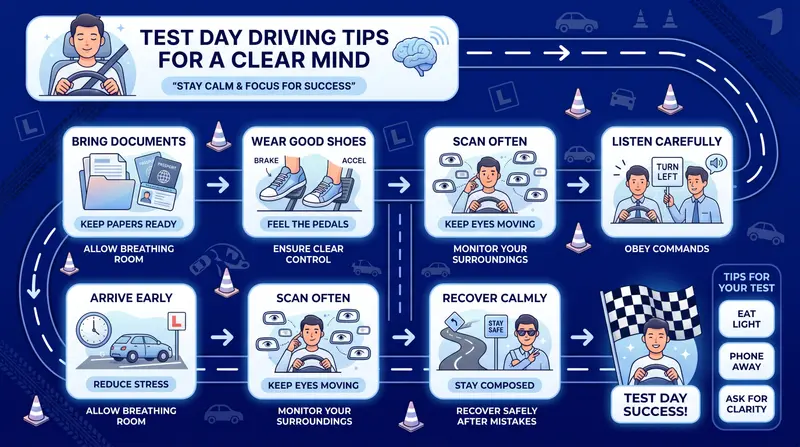
It can feel hard when you lack practice. It becomes easier when your safe habits feel natural.
Move slowly and use small corrections. Check your space before each movement.
Look farther ahead and slow earlier. Match speed to signs, traffic, turns, and weather.
Move slowly and look behind you often. Use small steering changes to stay steady.
Yes, ALO Driving School helps with road test scheduling. Call 214-862-6365 before booking.
Now you know how hard is the road test and what can make it easier. Strong practice helps with parking, stops, speed, lane changes, and calm recovery.
ALO Driving School can help you move toward test day. Prepare early, improve weak skills, and schedule when your driving feels safe.