- Blog
- Why Is Importance Of Defensive Driving In Irving So Big?
Why Is Importance Of Defensive Driving In Irving So Big?
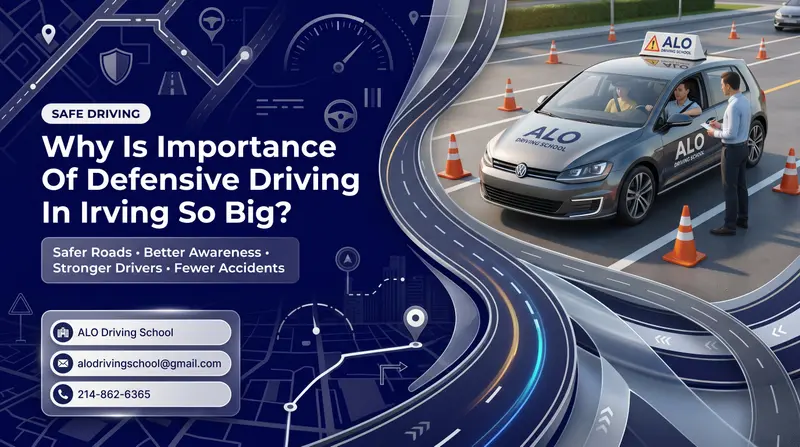
The importance of defensive driving in Irving is big because local roads can test your patience, focus, and judgment every day. You need safer habits for traffic, school zones, bad weather, lane changes, and rude drivers. Strong driving choices can help you avoid tickets, lower stress, and protect people around you. This guide explains what defensive driving means for real Irving roads. It also shows how ALO Driving School can help you learn with more confidence.
Why The Importance Of Defensive Driving In Irving Matters Every Day
The importance of defensive driving in Irving starts with daily road safety. You share the road with commuters, teens, parents, workers, visitors, and delivery drivers.
Irving traffic can change fast. You may drive near Airport Freeway, Belt Line Road, MacArthur Boulevard, or nearby DFW routes. A clear lane can turn crowded in seconds. A driver may brake late. A truck may block your view. A school zone may slow traffic without warning. You need habits that help you think ahead. That is where safe driving becomes useful. You learn to keep space, scan early, and avoid rushed moves. If you want guided local help, you can start with ALO’s online class option here and learn safer habits from home.
How Importance Of Defensive Driving In Irving Helps You Spot Risk Early
The importance of defensive driving in Irving becomes clear during sudden moments. You need time to see risk, understand it, and respond well.
- Safe Following Distance: Keep enough room to stop.
- Early Scanning: Look past the nearest vehicle.
- Mirror Checks: Watch all sides of your car.
- Smooth Braking: Slow down before danger grows.
- Speed Control: Match speed to road conditions.
- Lane Planning: Prepare before turns or exits.
Most danger gives a warning first. A car may drift in its lane. Brake lights may appear far ahead. A driver may speed behind you. Another may follow too closely near a stop. Strong defensive driving strategies help you notice these signs early. You check mirrors often. You keep your eyes moving. You leave space before you need it. You also avoid panic choices. These habits help you drive smoother through daily Irving traffic.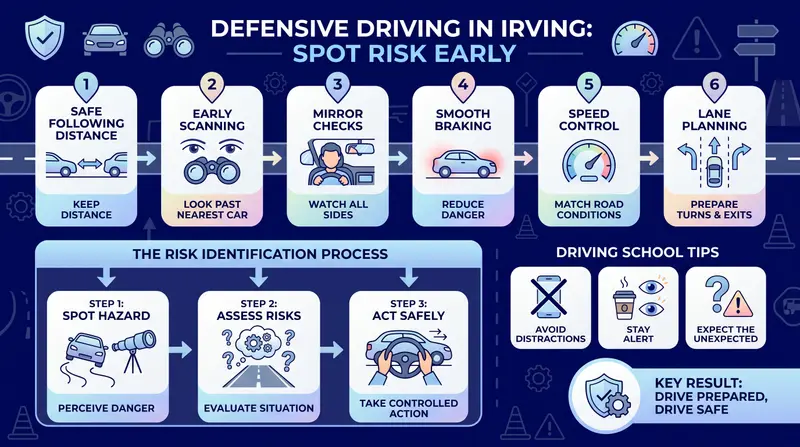
What Makes Safe Driving Hard In Local Traffic?
Safe driving gets harder when traffic feels rushed. You may face sudden stops, short gaps, school traffic, and distracted drivers.
Many drivers know basic rules. But pressure can change their choices. Someone may speed because they feel late. Another may cut across lanes. A distracted driver may miss a light. This is why situational awareness while driving matters. You need to watch the full road, not one car. You also need complying with traffic laws in Irving to stay safe and avoid citations. If you need extra support beyond reading, ALO Driving School also offers in-person skill support, and you can review that lesson option here.
|
Local Road Issue |
Better Driver Choice |
Why It Helps |
|
Heavy traffic |
Keep extra space |
You gain more time |
|
School zones |
Slow down early |
You protect others |
|
Sudden stops |
Watch far ahead |
You react sooner |
|
Fast drivers |
Let them pass |
You avoid conflict |
|
Unclear lanes |
Signal early |
You move safely |
You cannot control every driver. You can control your plan. That plan helps you stay ready.
How Importance Of Defensive Driving In Irving Builds Confidence
The importance of defensive driving in Irving also affects confidence. You feel calmer when you know your next safe move.
Many drivers feel nervous during heavy traffic. Some dislike merging. Others worry after a ticket, close call, or long break from driving. Defensive driving gives you a simple system. You learn where to look. You learn when to slow down. You learn how much room to keep. You also learn how to ignore pressure from rude drivers. If you are an adult who wants a stronger driving base, you can see ALO’s adult learning path here and choose support that fits your goal.
- Awareness: Watch the full road scene.
- Speed: Drive for conditions, not pressure.
- Space: Leave room around your vehicle.
- Patience: Do not rush unsafe gaps.
- Law: Respect lights, limits, and signs.
- Planning: Know your next move early.
Confidence grows through steady practice. You do not need perfection. You need calm, prepared choices.
Which Defensive Driving Strategies Work In Real Traffic?
Defensive driving strategies work best when you use them early. They help you prevent danger before it reaches your car.
Start with your eyes. Look far ahead. Check your mirrors often. Watch for late braking, drifting cars, blocked views, and quick lane shifts. Keep extra space near trucks, buses, and delivery vehicles. Put your phone away before you move. These small habits create more time. More time gives you safer options. In real driving, time is one of your best tools. You cannot remove every risk. But you can prepare for many risks before they become serious.
Why You Should Join ALO Driving School’s Online Safety Course
ALO Driving School’s online option can help you improve without changing your whole week. You can learn safer habits from a local Irving school.
This course is helpful if you want better focus, safer choices, and less stress behind the wheel. You can review road rules, risk control, driver attitude, and practical safety steps. You can also learn from home, which helps if your schedule feels full. ALO Driving School understands local drivers and Texas road needs. That makes the learning feel more useful. If you want a simple way to begin, you can take the next step through this page. It is a smart choice when you want stronger habits and more confidence.
How Importance Of Defensive Driving In Irving Supports Bad Weather Choices
The importance of defensive driving in Irving becomes even clearer during weather changes. Rain and fog can make simple drives harder.
Texas weather can shift quickly. A dry road can become slick within minutes. Fog can hide lane lines, signs, and brake lights. Driving in rain and fog requires slower choices. You should increase distance. You should use lights correctly. You should avoid sudden braking and sharp steering. If water gathers on the road, reduce speed and stay steady. These habits help you keep control. They also help you feel less afraid when visibility drops.
|
Weather Problem |
Safer Choice |
Driving Benefit |
|
Light rain |
Slow down gently |
Tires grip better |
|
Heavy rain |
Add more space |
You stop sooner |
|
Fog |
Use low beams |
Glare stays lower |
|
Wet lanes |
Avoid sharp moves |
Your car stays steady |
|
Poor view |
Watch farther ahead |
You react earlier |
Bad weather rewards patient drivers. You do not need speed. You need control, space, and focus.
How Situational Awareness While Driving Reduces Mistakes
Situational awareness while driving means you understand your full road space. You watch the front, sides, rear, signs, signals, people, and pavement.
This skill helps you notice small clues. A child may stand near a curb. A car may roll through a stop sign. A driver behind you may approach too fast. A cyclist may appear near a turn. These details give you time. You can slow down, wait, move away, or create space. Better awareness also helps with changing lanes safely. You see gaps sooner. You avoid blind spots. You stop making rushed decisions that create danger.
How Importance Of Defensive Driving In Irving Lowers Stress
The importance of defensive driving in Irving includes your peace of mind. Better habits can help with reducing driving stress during normal trips.
Stress often comes from feeling rushed or trapped. You may worry about missing your turn. You may feel boxed in by traffic. You may get angry when someone tailgates you. Defensive driving helps you lower that pressure. You leave earlier. You plan your lane sooner. You keep more room around your car. You also stop treating rude drivers as personal problems. This calmer mindset makes your drive feel easier and safer.
How Road Pressure Changes Driver Behavior
Road pressure can make good drivers choose poorly. Stress can lead to speeding, tailgating, sharp braking, and unsafe lane changes.
That is why defensive driving focuses on control. You learn how to pause before reacting. You learn how to create space instead of fighting traffic. You also learn how to stay steady when other people act careless. These habits help during work commutes, school pickups, errands, and highway trips. You protect your record, your car, and your confidence when you respond with patience. Strong driving is not aggressive. Strong driving is calm, aware, and prepared.
|
Stress Trigger |
Smart Response |
Result |
|
Tailgating |
Add space ahead |
You avoid sudden moves |
|
Honking |
Stay focused |
You keep control |
|
Missed turn |
Reroute calmly |
You avoid rushing |
|
Heavy traffic |
Breathe and wait |
You lower tension |
|
Late schedule |
Slow your pace |
You reduce risk |
You cannot remove every delay. You can control your response. That choice matters every day.
How Avoiding Road Rage Keeps You Safer
Avoiding road rage protects your safety, mood, and future. Anger can turn a normal drive into a dangerous moment.
- Stay Calm: Do not copy unsafe behavior.
- Let Them Pass: Avoid fighting for space.
- Keep Distance: Move away from risky drivers.
- Avoid Gestures: Keep both hands ready.
- Breathe Slowly: Lower stress before reacting.
- Focus Forward: Keep your mind on safety.
You may meet rude drivers often. Someone may cut you off. Another driver may speed past you. A person may honk even when you drive safely. You do not need to answer. A defensive driver chooses safety over pride. You let the risky driver go. You keep distance. You keep your hands ready. You focus on getting home safely. This habit supports calmer driving and fewer risky reactions.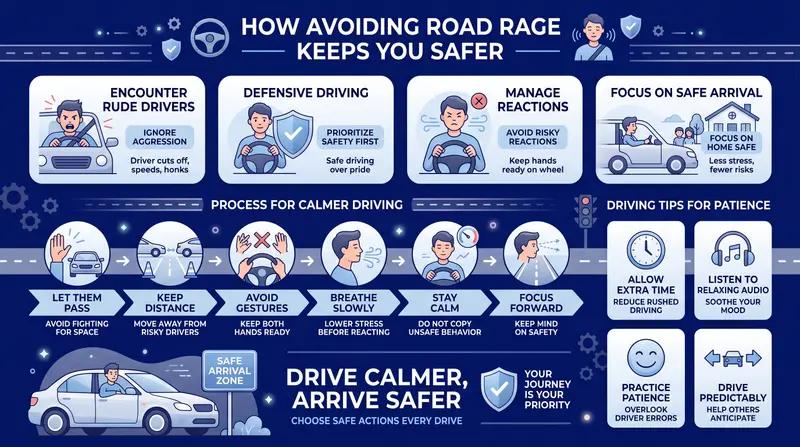
Why Changing Lanes Safely Needs Patience
Changing lanes safely takes timing, space, and full attention. You need mirrors, signals, blind spot checks, and a smooth move.
Many side-swipe crashes happen because drivers rush. Some signal too late. Others move without checking. Some force their car into tight spaces. Irving roads can make this common near exits, stores, school zones, and highway ramps. You should plan early. Signal clearly. Check mirrors. Look over your shoulder. Move only when space allows. If the gap feels too small, wait. That small pause can prevent a serious mistake.
Frequently Asked Questions
Why is importance of defensive driving in Irving so big?
It matters because Irving traffic can change quickly. Safer habits help you stay alert, calm, and prepared.
How can a defensive driving course in Irving help me?
A course can help you improve safer habits. It can also support better awareness, smoother reactions, and smarter choices.
Can defensive driving help with reducing driving stress?
Yes, it can help you feel more prepared. You learn how to plan ahead and avoid risky reactions.
What habits support safe following distance?
You should leave more space in traffic. You should add extra room during rain, fog, or sudden stops.
Does ALO Driving School offer online learning?
Yes, ALO Driving School offers online course options. You can call 214-862-6365 before you enroll.
Start Safer Habits With ALO Driving School
Safer habits can change your daily drive. You can feel calmer, more aware, and more prepared when you learn how to handle risk with confidence.
Do not wait for another close call. ALO Driving School can help you take the next step toward better driving habits today.
- Company Name: ALO Driving School
- Website: https://alodrivingschool.com
- Email: [email protected]
- Address: 1221 W. Airport Fwy, Suite #217 (2nd Floor), Irving, TX 75062
- Phone Number: 214-862-6365