- Blog
- Road Test Tutorial In Irving: How Can You Pass?
Road Test Tutorial In Irving: How Can You Pass?
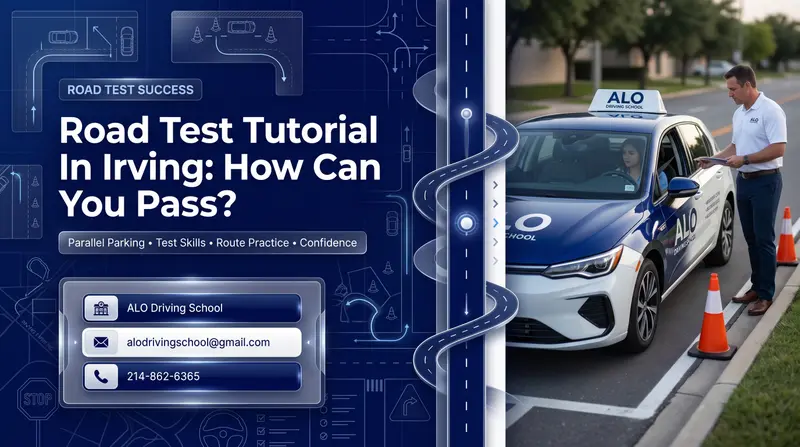
A road test tutorial in Irving helps you understand test-day skills before you sit behind the wheel with an examiner. You need smooth control, clear checks, safe turns, proper stops, and strong lane habits. This guide gives you fresh tips for Irving drivers, including signs, reversing, spacing, blind spots, and test confidence. It also shows how ALO Driving School can help you schedule your road test and prepare through helpful driver services.
Why A Road Test Tutorial In Irving Matters Before Test Day
A road test tutorial in Irving gives you a clear practice plan. You stop guessing what to review. You start building habits that help during the real test.
Many students feel nervous because they only practice driving around. They do not practice the test routine. That can hurt them. The examiner looks at more than movement. They watch your judgment, timing, observation, and control. You need to show that you can handle signs, traffic, turns, stops, spacing, and lane choices. ALO Driving School helps you plan that next step with local support. When your skills feel ready, you can choose your appointment here and move forward with more confidence.
How A Road Test Tutorial In Irving Helps You Practice Smarter
A road test tutorial in Irving helps you practice with purpose. You do not just drive around. You focus on the exact habits that affect your score.
Your test starts before the car moves. You should adjust your seat. You should set mirrors. You should buckle up. You should check your surroundings. Then you must drive with calm control. Many learners fail because they panic after one small error. You need a repeatable routine. That routine keeps your hands, eyes, and feet working together. It also helps you recover if something does not go perfectly.
- Seat Setup: Sit where you can control safely.
- Mirror Setup: Adjust mirrors before moving.
- Signal Timing: Show your plan before turning.
- Full Stops: Stop fully at signs and lines.
- Speed Choice: Match your pace to conditions.
- Calm Breathing: Stay steady after small mistakes.
These steps help you feel less rushed. Practice them until they feel natural.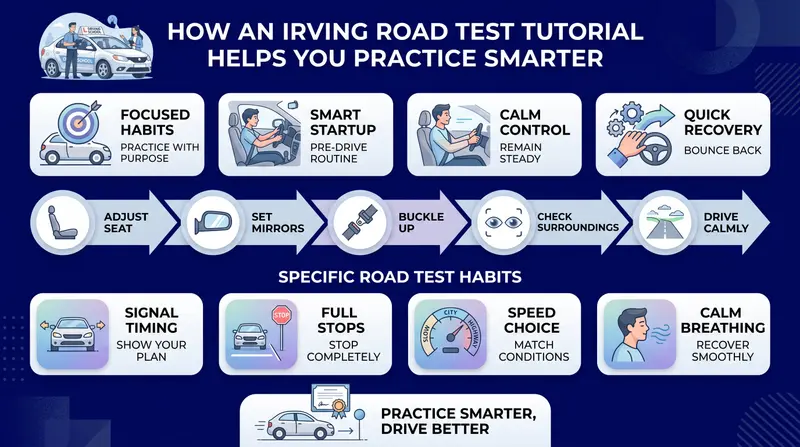
What Should You Know About A Texas Learner License?
A Texas learner license is part of your test path. You should check your status and documents before your appointment.
Paperwork mistakes can ruin a good driving day. You may feel ready, but missing details can delay your test. Check your permit, appointment, ID needs, and vehicle requirements early. Keep everything in one folder. Ask questions before test day, not during check-in. This simple habit lowers stress. It also helps you focus on driving, not missing items. A prepared student usually feels calmer because the basics already feel handled.
|
Test Prep Item |
What You Should Check |
Why It Helps |
|
Permit status |
Confirm your license details |
You avoid delays |
|
Appointment time |
Know your exact test slot |
You arrive calmer |
|
Vehicle condition |
Check signals and brake lights |
Your car stays ready |
|
Required items |
Keep documents together |
You reduce stress |
|
Practice notes |
List weak skills |
You train smarter |
Good test preparation starts at home. Your calm mind helps your driving.
How A Road Test Tutorial In Irving Improves Vehicle Control
A road test tutorial in Irving should help you control the car smoothly. Examiners notice rough starts, hard stops, wide turns, and late reactions.
Your car should feel steady during the whole test. Press the gas gently. Brake early. Turn with control. Keep your lane position centered. Do not jerk the wheel. Do not rush through intersections. Smooth control makes your driving look safe and mature. If you want extra practice before your test, you can add lesson support before test day. This can help if you feel unsure with turns, parking, or real traffic.
- Steering: Keep your hands steady and relaxed.
- Braking: Slow down before stops feel urgent.
- Acceleration: Press the gas gently after stops.
- Positioning: Stay centered in your lane.
- Observation: Check the road before every move.
- Recovery: Stay calm after small errors.
Control shows confidence. You pass better when your drive feels safe.
Why Lane Control And Positioning Can Affect Your Score
Lane control and positioning show how well you manage space. You should stay centered and avoid drifting toward lines, curbs, or parked cars.
Many test mistakes happen because learners look too close. They stare at the hood or lane line. That makes the car wander. Look farther ahead instead. Your hands will follow your eyes. During turns, enter the correct lane. During straight driving, keep steady spacing from the curb. Near parked cars, leave safe room. On narrow roads, slow down and hold your position. The examiner wants to see safe space management, not rushed movement.
Why Mirror Checks And Blind Spots Matter During The Test
Mirror checks and blind spots show that you know what happens around you. They also prove that you do not move by guessing.
You should check mirrors before braking, turning, changing lanes, and reversing. You should also look over your shoulder when needed. Mirrors cannot show everything. A car, cyclist, or motorcyclist may sit beside you. Make your checks visible, but not dramatic. Turn your head enough to show awareness. Keep your hands steady. Then move only when safe. These habits tell the examiner that you understand real traffic risk.
Why Turning Smoothly Helps You Look Prepared
Turning smoothly can make your whole test feel safer. A rough turn can show weak timing, poor speed control, or nervous steering.
Good turns start early. Signal first. Slow down before the turn. Check mirrors. Look into the path you want. Keep your car in the proper lane. Do not cut corners. Do not swing too wide. After the turn, straighten smoothly and adjust speed. Many students rush turns because they fear holding up traffic. That fear can cause bigger mistakes. Take the safe opening. Move with control. A smooth turn shows that you understand timing.
What Traffic Rules Should You Review Before Testing?
Traffic rules matter because your test checks safe choices. You need to follow signs, signals, stops, lanes, and right-of-way rules without reminders.
Irving roads can include busy intersections, school zones, shopping areas, and side streets. You should read signs early. Do not wait until the last moment. Traffic signs and signals in Irving may require quick but calm decisions. Watch speed signs. Look for lane arrows. Stop before marked lines. Yield when needed. Give pedestrians space. When you obey rules with confidence, the examiner can see that you respect real road safety.
How Four-Way Stop Rules Work On Test Day
Four-way stop rules can feel confusing under pressure. You need patience, clear observation, and safe timing.
Stop fully first. Then check who arrived before you. The first vehicle usually goes first. If two cars arrive together, the driver on the right often goes first. If another driver waves you forward, move only when safe. Never rush because someone honks. Never roll through the stop. The examiner wants safe judgment. A slow, correct choice is better than a fast, risky one.
Why You Should Schedule Your Road Test With ALO Driving School
Scheduling your test should feel simple, not confusing. ALO Driving School gives Irving drivers a local way to take that next step.
Many learners wait until they feel “perfect.” That can delay progress. Others book too early and feel unprepared. A better plan sits between both. Practice your key skills. Check your documents. Review your weak areas. Then book when your routine feels steady. ALO Driving School helps make that next move easier for local students. The main goal is simple. You want a clear test date, a calmer mind, and better preparation.
Why An Online Course Can Help Before Your Road Test
An online course can help you strengthen road knowledge before your road test. It supports your understanding of safety, signs, and decision-making.
Some learners drive well but forget rules under pressure. Others understand rules but need more confidence. ALO Driving School’s online adult option can help you review core driving knowledge in a flexible way. This can support your road test preparation if you are an adult learner or returning driver. You can study without changing your whole schedule. You can also connect lessons with real practice. To build a stronger foundation, you can review the online adult option and decide if it fits your needs.
How Following Distance Shows Safe Judgment
Following distance is one of the clearest signs of safe judgment. You need enough space to stop without panic.
During the test, do not crowd the car ahead. Leave extra room in traffic, near signals, and during bad weather. If the car ahead brakes suddenly, you need time. If you follow too closely, the examiner may see you as unsafe. Good spacing also helps you see more of the road. It lowers stress and gives you smoother braking. Keep distance even when other drivers act impatient. Your test score depends on safety, not speed.
How To Handle Signs, Speed, And Lane Changes Together
You often need to manage signs, speed, and lanes at once. This is where test pressure can rise fast.
Imagine you approach an intersection. You see a speed sign, a turn lane, and other cars slowing. You must read the sign, adjust speed, signal, check mirrors, and move safely. This is why practice should mix skills, not separate them. Real driving rarely gives one task at a time. A strong learner connects each step. You see the sign early. You plan the lane. You check the space. Then you move with control.
|
Test Moment |
What You Should Do |
What It Shows |
|
Approaching signs |
Read early |
You plan ahead |
|
Lane change |
Signal and check |
You value awareness |
|
Slowing traffic |
Brake gently |
You keep control |
|
School area |
Reduce speed |
You respect safety |
|
Turning lane |
Enter early |
You avoid rushed moves |
This table shows a key truth. Test success comes from connected habits.
Why Reversing Safely Needs Extra Practice
Reversing safely can reveal your patience and awareness. You should move slowly and check every side before backing.
Many students rush in reverse because they feel watched. That creates mistakes. Before reversing, look behind you. Check mirrors. Turn your head when needed. Keep your foot ready on the brake. Move slowly. Watch for pedestrians, curbs, cars, poles, and shopping carts. If you feel unsure, stop and check again. Reversing is not about speed. It is about control and caution.
- Look Back: Check behind before moving.
- Use Mirrors: Watch both sides as you reverse.
- Move Slowly: Keep your speed very low.
- Cover Brake: Stay ready to stop.
- Pause Often: Stop if anything feels unclear.
- Watch Pedestrians: People can appear quickly.
A careful reverse looks better than a fast one. Slow control helps you avoid errors.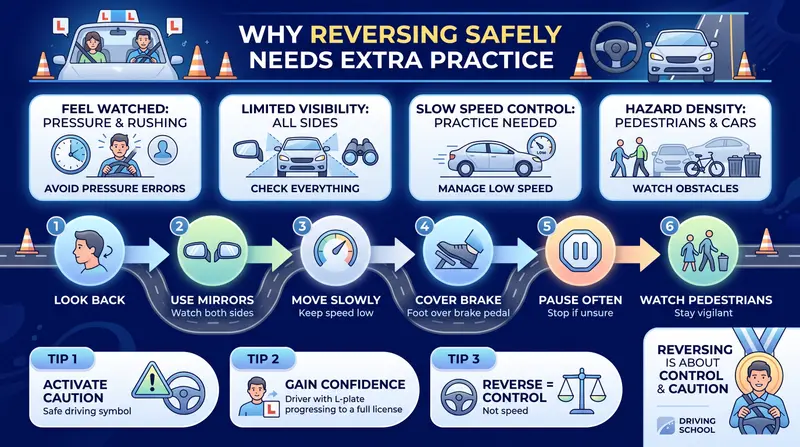
Why The Seatbelt Requirement In Irving Matters
The seatbelt requirement in Irving is basic, but examiners still notice it. You should buckle up before the vehicle moves.
Create a start-up routine before each practice drive. Sit properly. Adjust the seat. Set mirrors. Buckle your seatbelt. Check your surroundings. Then begin. This routine helps you avoid forgetting simple steps during test nerves. It also shows that safety comes first. A good driver does not skip the basics. Your test begins with small choices, and those choices shape the full drive.
What If You Use A Manual Transmission Clutch?
A manual transmission clutch needs extra control during starts, stops, and turns. You must use smooth timing without losing focus on the road.
Practice clutch control before test day. Stalling can happen when you release too fast. Rolling can happen when you start on a slope. Jerky movement can make the examiner feel unsafe. Learn the bite point. Shift smoothly. Keep your eyes up. Do not stare at the gear stick. Listen to the engine and stay calm. If you drive a manual, your goal is simple. Make the car feel steady and predictable.
How To Stay Calm During Examiner Directions
Examiner directions can feel stressful. You should listen carefully and ask for clarification if needed.
Do not rush after hearing an instruction. Repeat it in your mind. Check mirrors. Signal if needed. Move only when safe. If you miss a turn, do not panic. The examiner will guide you. A missed turn is usually less serious than an unsafe correction. Never cut across lanes late. Never brake sharply because you feel embarrassed. Safe recovery matters. The examiner wants to see calm judgment, not perfect memory.
Frequently Asked Questions
How can a road test tutorial in Irving help me pass?
A tutorial helps you practice test-day habits. It can improve your control, timing, and awareness before the exam.
Do I need a Texas learner license before testing?
You should confirm your license status before scheduling. You also need the required documents ready before arrival.
What mistakes cause road test failure?
Common mistakes include rolling stops, poor mirror checks, weak lane control, and unsafe turns. Rushing can make these worse.
How do I handle traffic signs and signals in Irving?
Read signs early and slow down with time. Stop fully when required and follow lane markings carefully.
Can ALO Driving School help me schedule?
Yes, ALO Driving School helps with road test scheduling. You can call 214-862-6365 before booking.
Schedule Your Road Test With ALO Driving School
A strong road test starts with smart practice. Review stops, signs, mirrors, turns, lane position, spacing, and reversing before your appointment.
ALO Driving School can help you take the next step. Prepare early, stay calm, and schedule your road test when your skills feel ready.
- Company Name: ALO Driving School
- Website: https://alodrivingschool.com
- Email: [email protected]
- Address: 1221 W. Airport Fwy, Suite #217 (2nd Floor), Irving, TX 75062
- Phone Number: 214-862-6365